Google Analytics 4 Properties: Everything You Need to Know
2021-02-20

Hello to Fall, the time for huge tech keynotes with "drop-the-mic" announcements and product releases. While it's not a Pixel, iPad, or laptop, there's another announcement that's even bigger for us marketers and analysts.
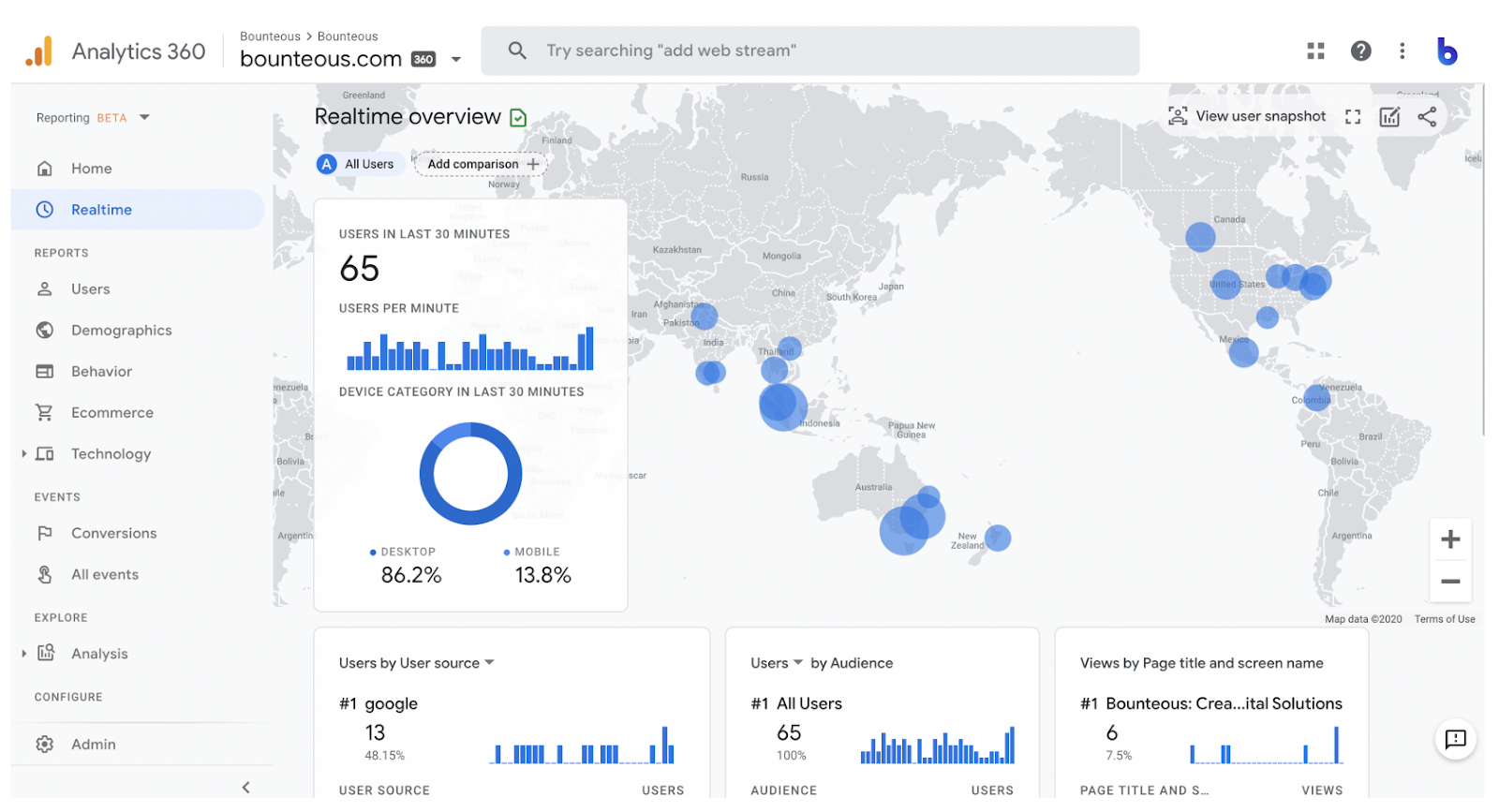
Introducing Google Analytics 4 Properties.
Google Analytics App + Web has left beta and received this new, polished title. We've officially entered the next generation of Google Analytics! This latest version represents a major technology leap that will change how organizations use machine learning, privacy-first data collection, and audience strategies. Our team is very excited and your organization should be too.
For our full list of Google Analytics 4 Properties resources, feel free to skip ahead.
The Benefits of Google Analytics 4 Properties
Whether you feel excitement, nervousness, reluctance, or inspiration (or maybe all of the above), this name change is a sign to not put things off and wait. It's a signal for all of us to transition from experimenting with the beta product toward formally adding the new Google Analytics to all future web measurement strategy discussions.
With the new data model, ability to combine mobile app and web data into a single view, analysis tools, audience management, and measurement differences, an understanding of the product is necessary along with a shift in how you lead data initiatives within your organization. As a reminder, combining app and web data is a feature of Google Analytics 4 Properties and not its sole purpose. There are plenty of features that benefit web-only and app-only businesses.
If you're not convinced, keep in mind that it's not just about user analytics and measuring differently. It's about evolving to keep up with the Google Marketing Platform as a whole. Using the latest in Google's data-collection will let you ultimately leverage and integrate with your media and cross-channel goals across Google Marketing Platform to mature data activation strategies.
The latest version of Google Analytics also addresses the top issue in digital marketing and analytics—fluctuations of privacy policies, browser updates, and cookies. Organizations will be able to measure audiences and insights even when there are no identifiers. Google Analytics 4 Properties include a built-in connection to Google BigQuery,adding cloud data querying capabilities to your martech stack. An enterprise 360 version was announced and will be available at a later date that will bring even more BigQuery features.
What Changes Should I Make Today?
Google Analytics 4 Properties (GA4) will still have a free version. So, there's no excuse not to competitively stay ahead by beginning strategy and building a new analytics architecture with GA4. The lights aren't turning off for the Google Analytics (GA) that we know and love right now, so please don't abandon your current tracking or think that your recent efforts aren't valuable. The goal, for now, is dual-tracking with both Universal Analytics and Google Analytics 4 properties deployed via Google Tag Manager.
The latest version of GA looks different, behaves differently, and at its core, it’s a completely new methodology for web and mobile app tracking. You can probably navigate your current GA instance with your eyes closed at this point, but ramping up your familiarity and understanding of GA4 right now by investing in time, partner relationships, or training will deliver short- and long-term ROI.
Get our full recommendations in this 19-page whitepaper: Unifying Your Measurement Approach with Google Analytics 4 Properties - Whitepaper
How Did We Get Here? A Google Analytics Timeline
Let's take a moment to peek at how far we've come.
2005 -The Urchin Acquisition

Fifteen years ago was the introduction of Google Analytics, who acquired Urchin (we still have remnants like the "U" in UTM parameters and the "UA" in property tracking IDs!). Source.
2010 - Google Analytics Classic Properties
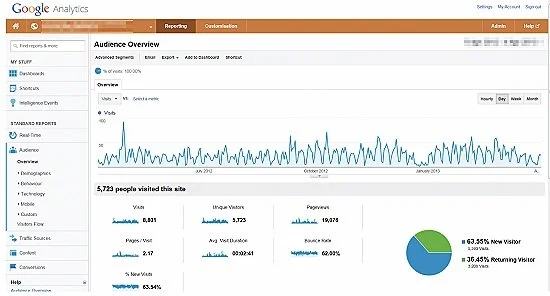
The interface here is more familiar, but with expanded tracking and reporting. Source.
2015 - Google Analytics Universal Properties
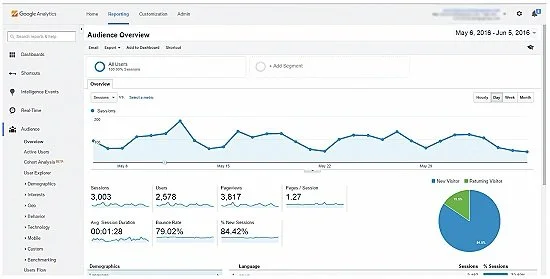
After synchronous and asynchronous versions of the ga.js library, the platform and tracking evolved into Universal Analytics, or analytics.js (what you likely have right now).
2019 and Now
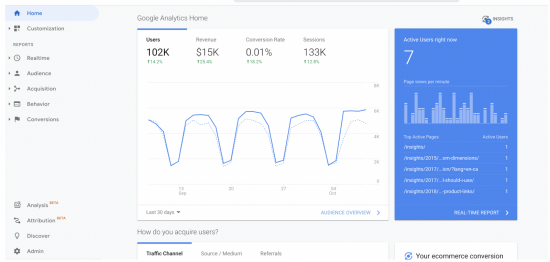
This is what we see now when viewing web data in Google's standard web properties. Beyond the Universal Analytics or gtag tracking that's collecting the data, advanced analysis tools, user-first metrics, and automated insights are more recent bonuses to the interface and reporting experience.